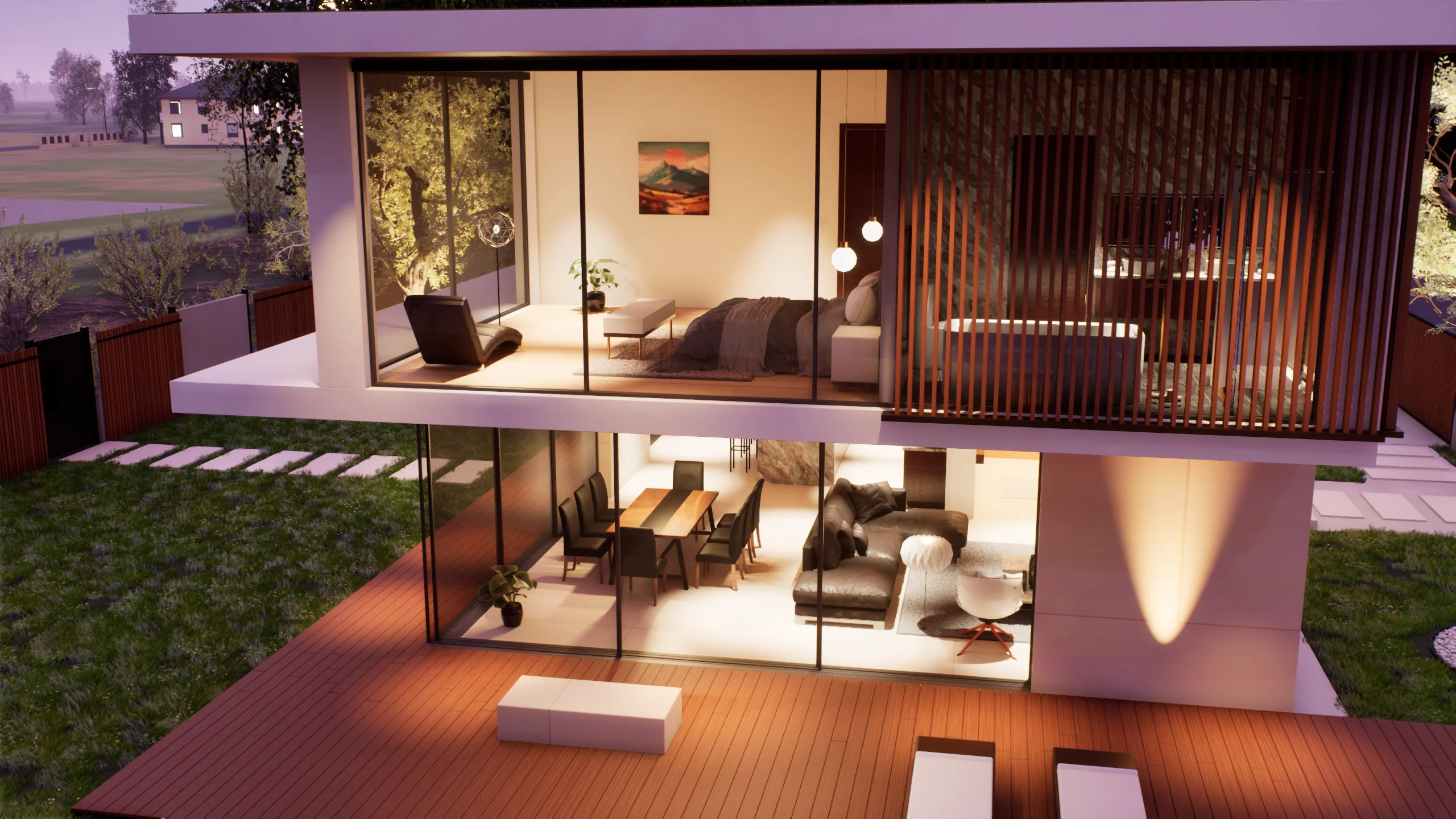
The tools of games and films, pointed at houses
Technology
We model in Blender and build in Unreal Engine 5, the real-time engine behind many of today's games and film sets. Here is what that makes possible, and where the real-world data comes from.
Blender and Unreal Engine 5
Every house starts as a precise model in Blender: walls, openings, roofs, joinery and furniture, with their materials. The same model renders our still images and films.
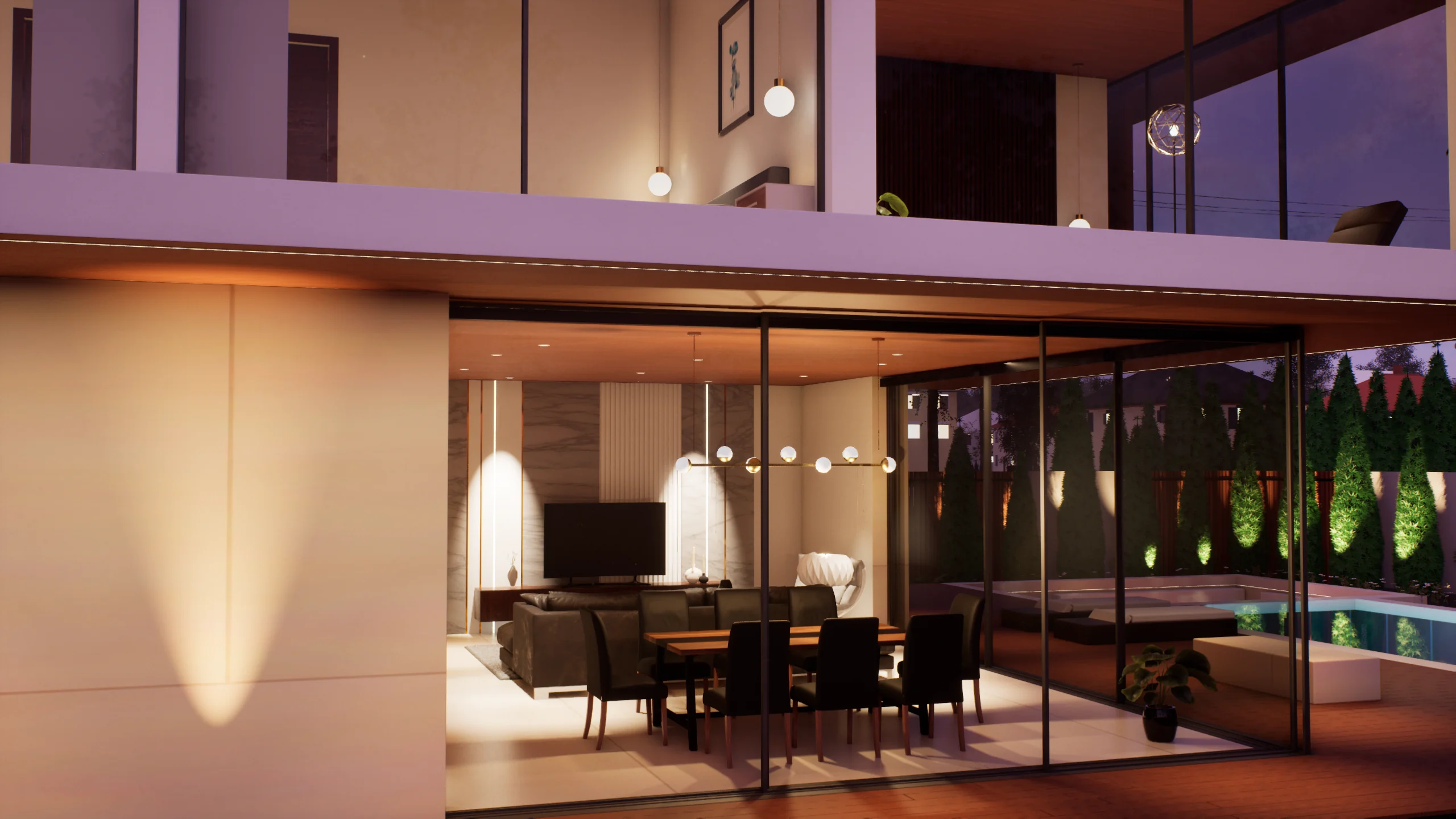
For the real-time experience we bring it into Unreal Engine 5, where light is computed as you move. Daylight bounces off the floor onto the ceiling, lamps light the rooms around them, and glass, water and polished stone reflect what is really around them.
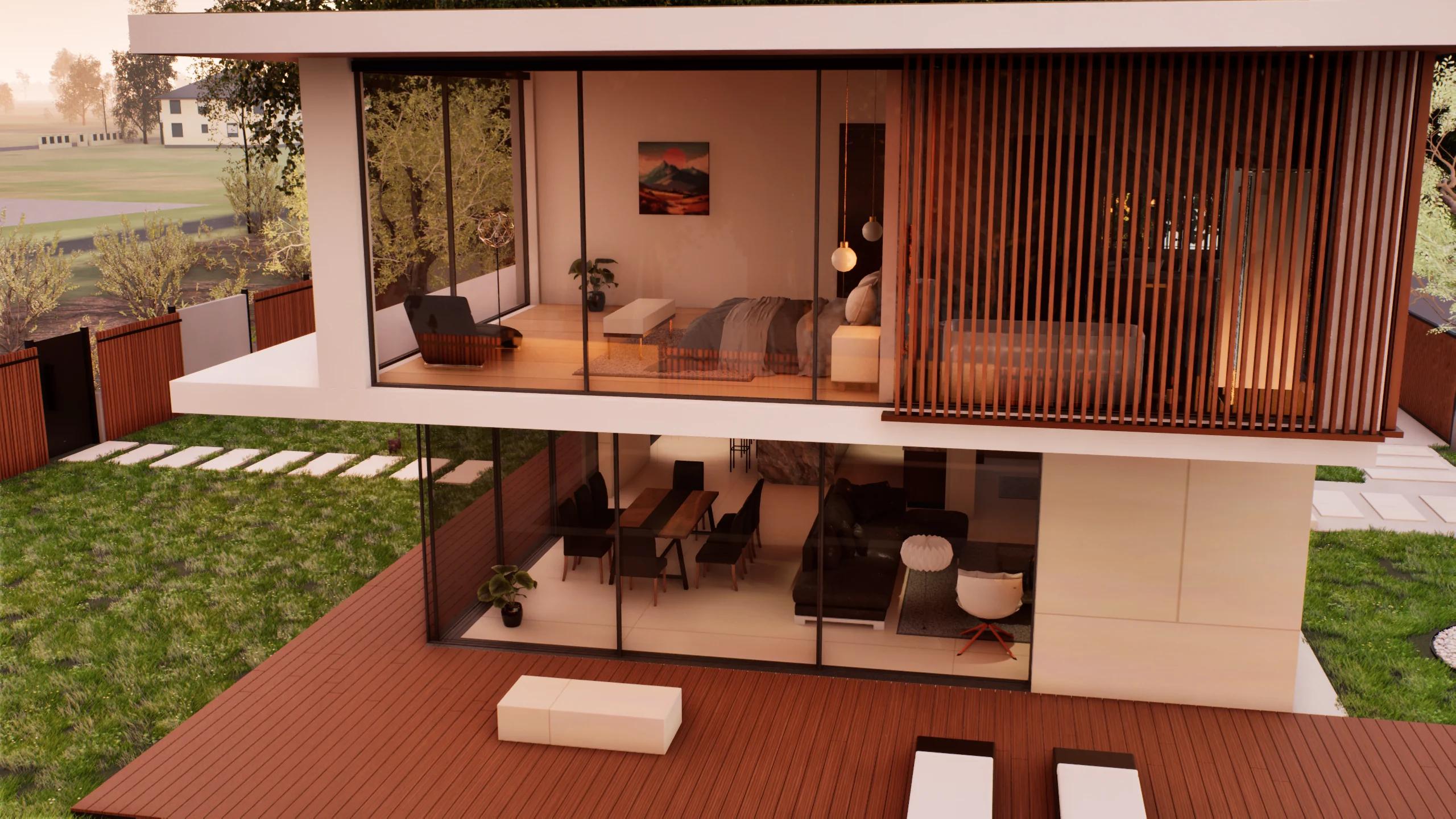
The real sun
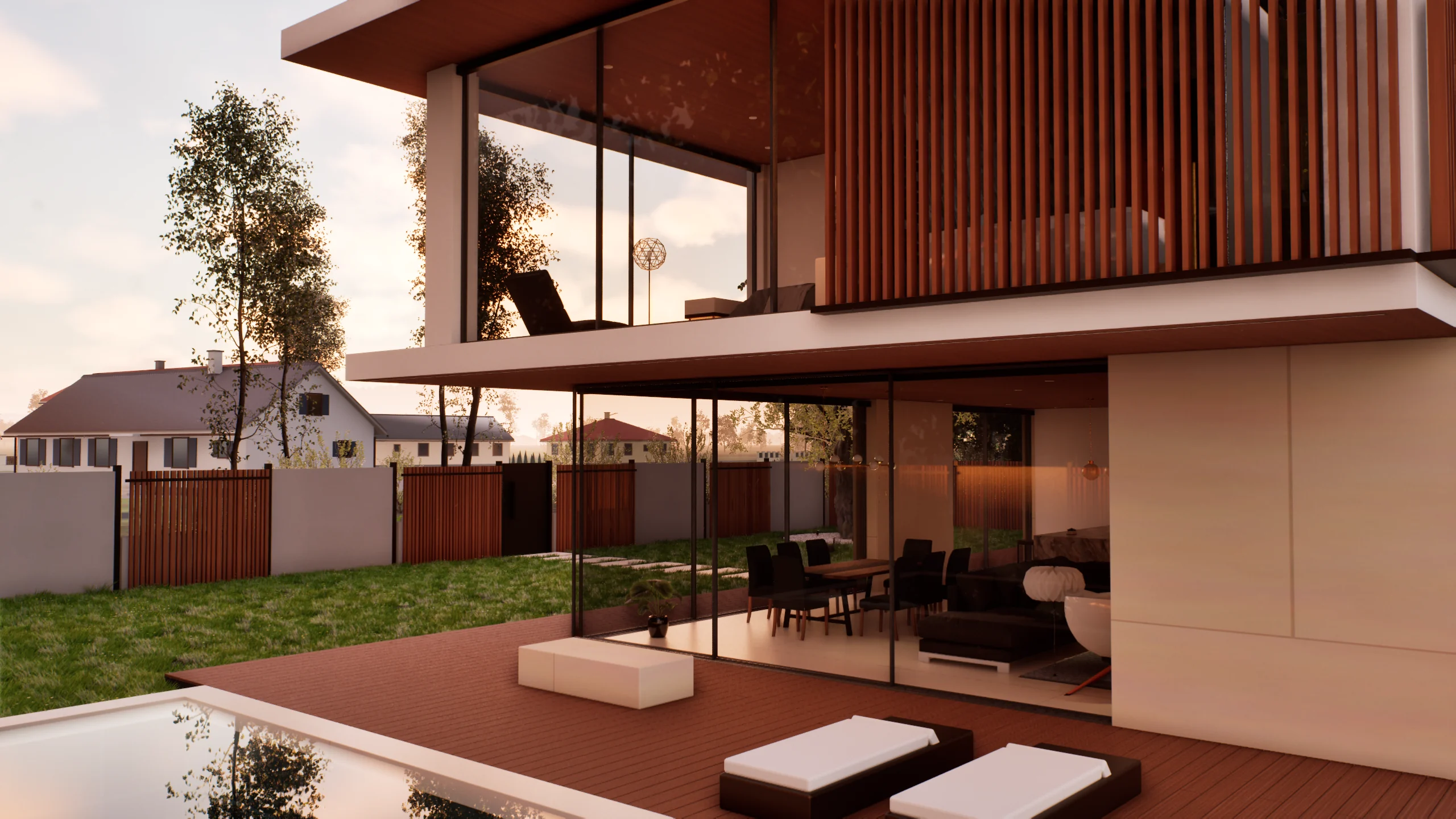
The sun's position is calculated from astronomy, not placed by hand: the plot's latitude and longitude, the day of the year, the equation of time and summer time. Sunrise, sunset and every shadow fall at the right minute.
We turn the model to true north from the map, so the sun comes from where it really will. A panel can show the date, the sun's height and bearing, how much of the pool is in the sun, and how much sunlight comes through the glass, as a comparison between options.
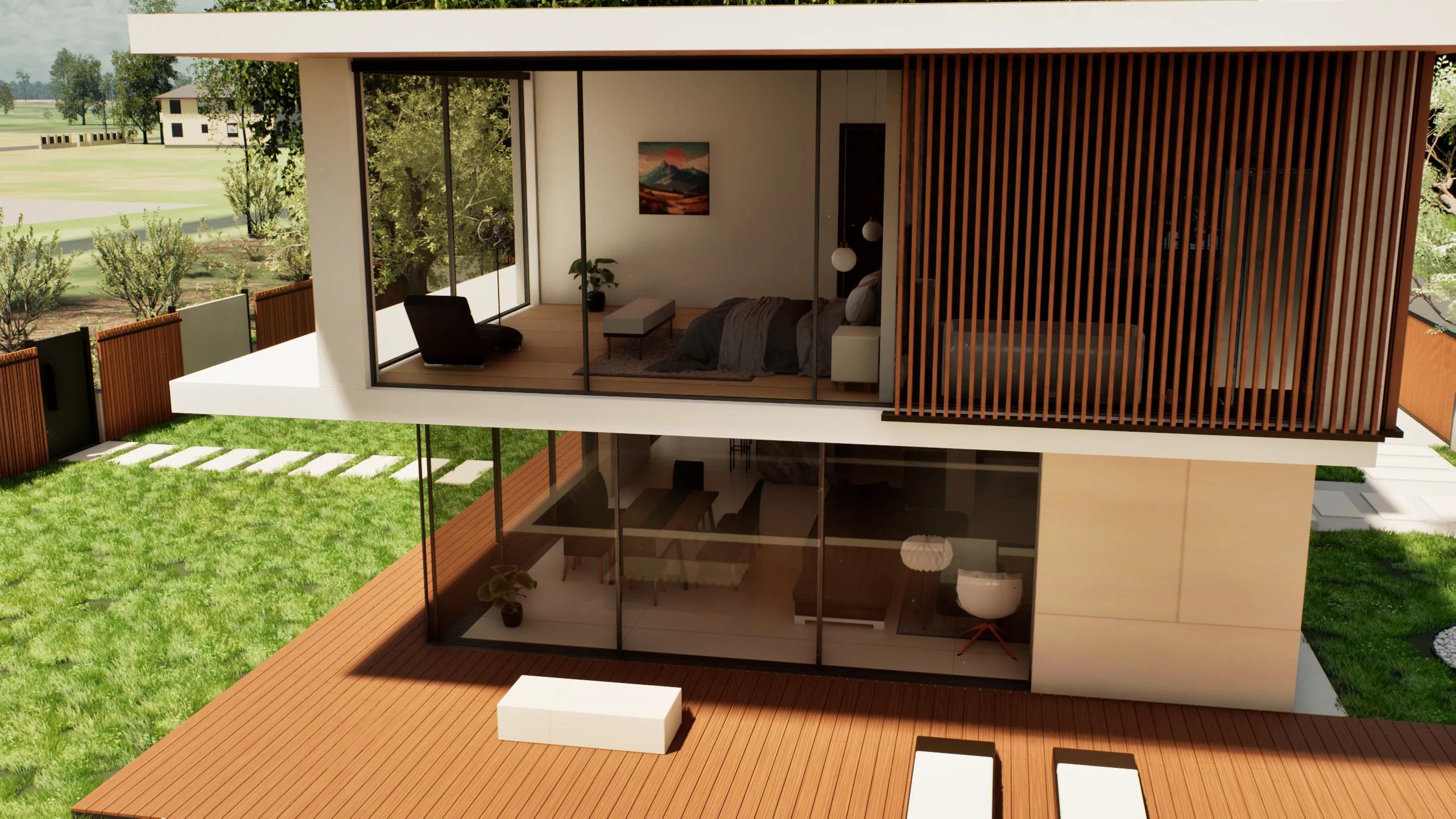
Weather and seasons
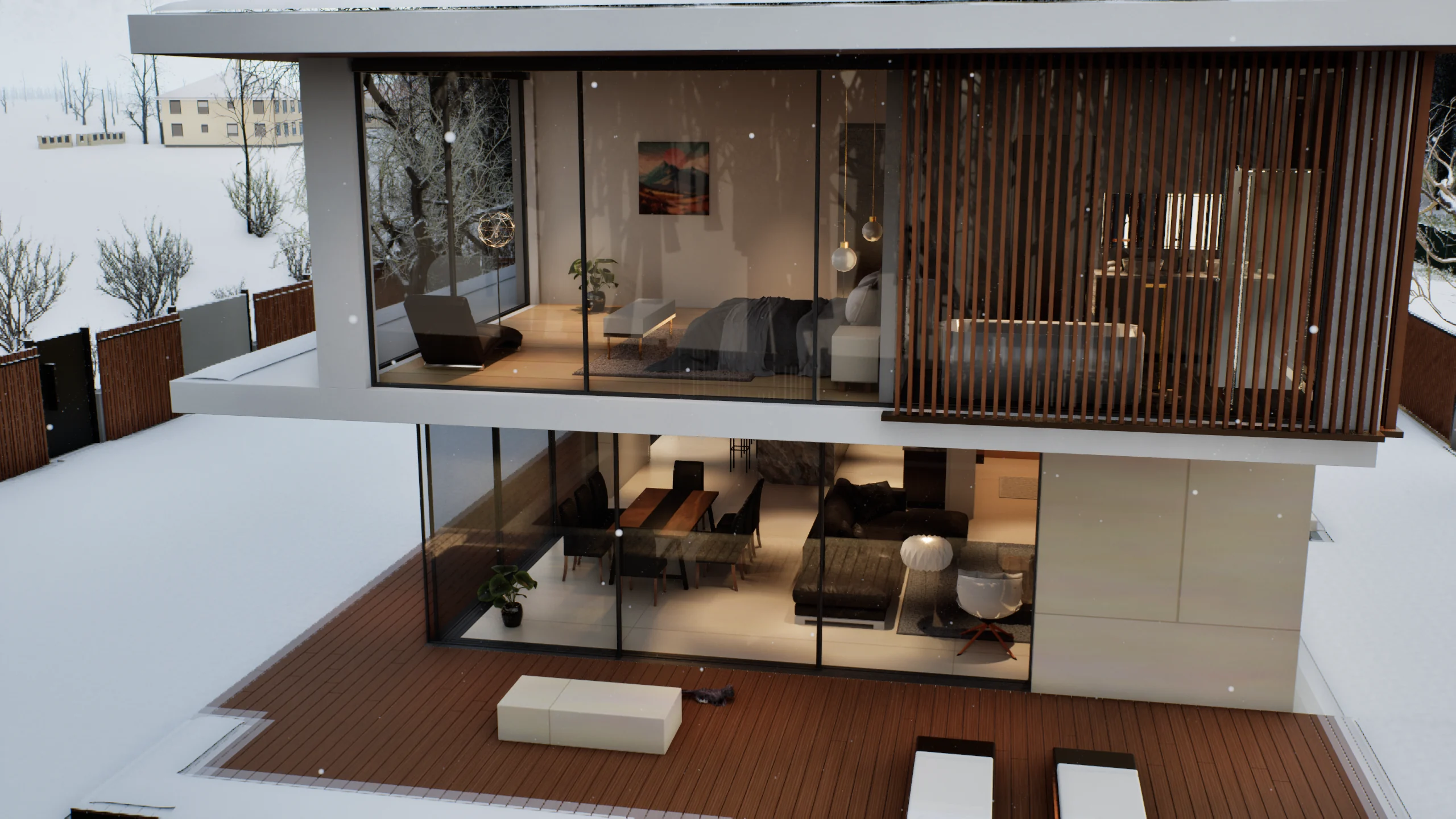
Clouds gather before rain. Rain darkens and wets every surface, puddles grow in the hollows, the pool ripples and drops run down the glass. A storm brings wind, lightning and thunder. Snow settles over half a minute and takes footprints, and nothing under a roof gets wet or white.
The year turns as well. Leaves go gold and red in autumn and fall by winter, buds open in spring and the lawn rests in the cold months. By night every lamp has its own moment to come on, and the birds give way to crickets.
Real-world data
The plot's boundaries come from the cadastre. Streets, woods, gardens and the footprint of every building around it come from OpenStreetMap; the nearest houses take their roofs and colours from aerial photos. Further out, where detail no longer matters, the landscape is generated.
The data places the house; it is never published. We show no addresses, parcels or maps of a client's plot.
Live design
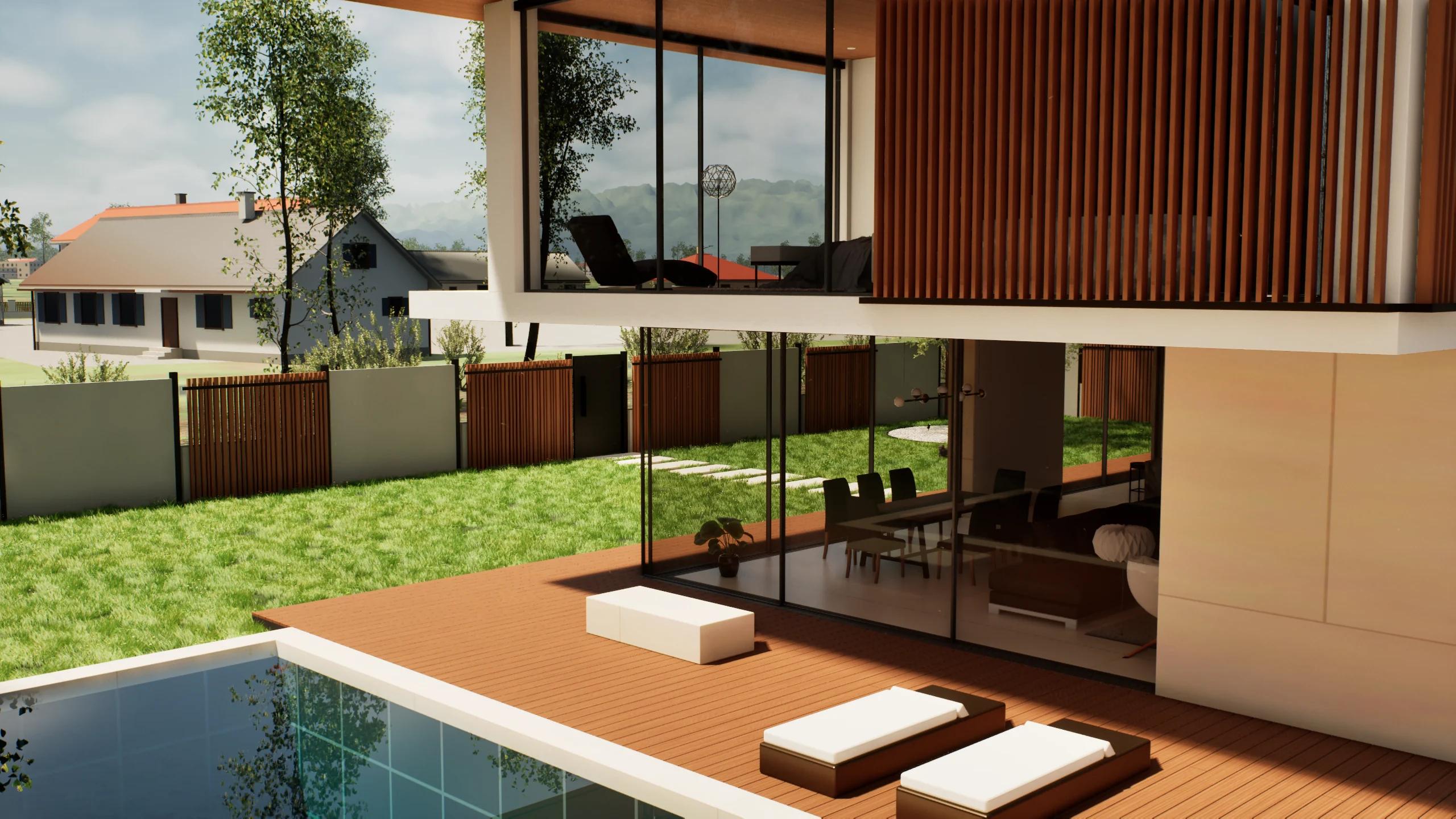
Materials and finishes are options, not decisions. In the Glass Villa, nineteen parts of the house and its furniture take any of 129 finishes, and five whole looks change everything at once, while you stand in the room.
Why real time
A render answers one question: what does this view look like at this moment. Real time answers the next question too, and the one after: what about at eight in the morning, in November, with the louvres closed, from the kitchen.
That is how decisions get made in a house you cannot visit yet.
Data credits
Map data © OpenStreetMap contributors, available under the Open Database Licence
See it with your own plot
Send us the address or the parcel number and your plans, and we will tell you what we can build.
Start a project